
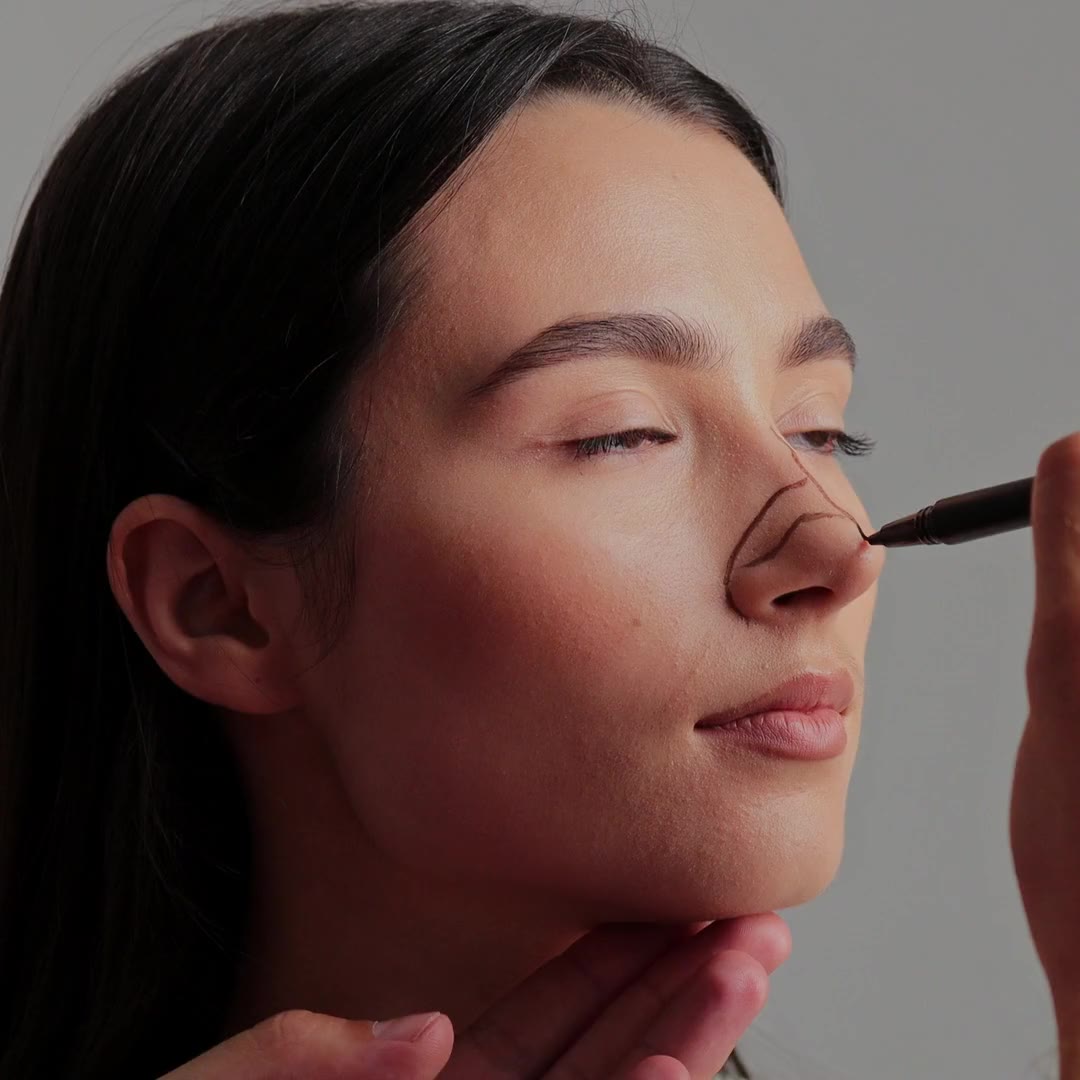
Rhinoplasty in Beverly Hills
The shape of the nose and the way it breathes, planned together, with care for the features that make it your own.
What it addresses
- Difficulty breathing through the nose, including problems with the septum
- The line of the bridge
- A tip that needs refinement
- A nose that has been operated on before
Who it is for
- Patients concerned with the shape of the nose, its breathing, or both
- Patients who want the nose refined while keeping the features that reflect their heritage
- Patients in good general health
- Patients who are nicotine-free for a minimum of six weeks before and after surgery
What to expect
- A consultation with Dr. Farajzadeh himself, focused on understanding what you truly want before any procedure is discussed
- A plan for the shape of the nose and its airway together
- An open or closed approach, chosen from your anatomy
- A splint at first, and a shape that refines as the swelling resolves
- Surgery in an operating room
What rhinoplasty is
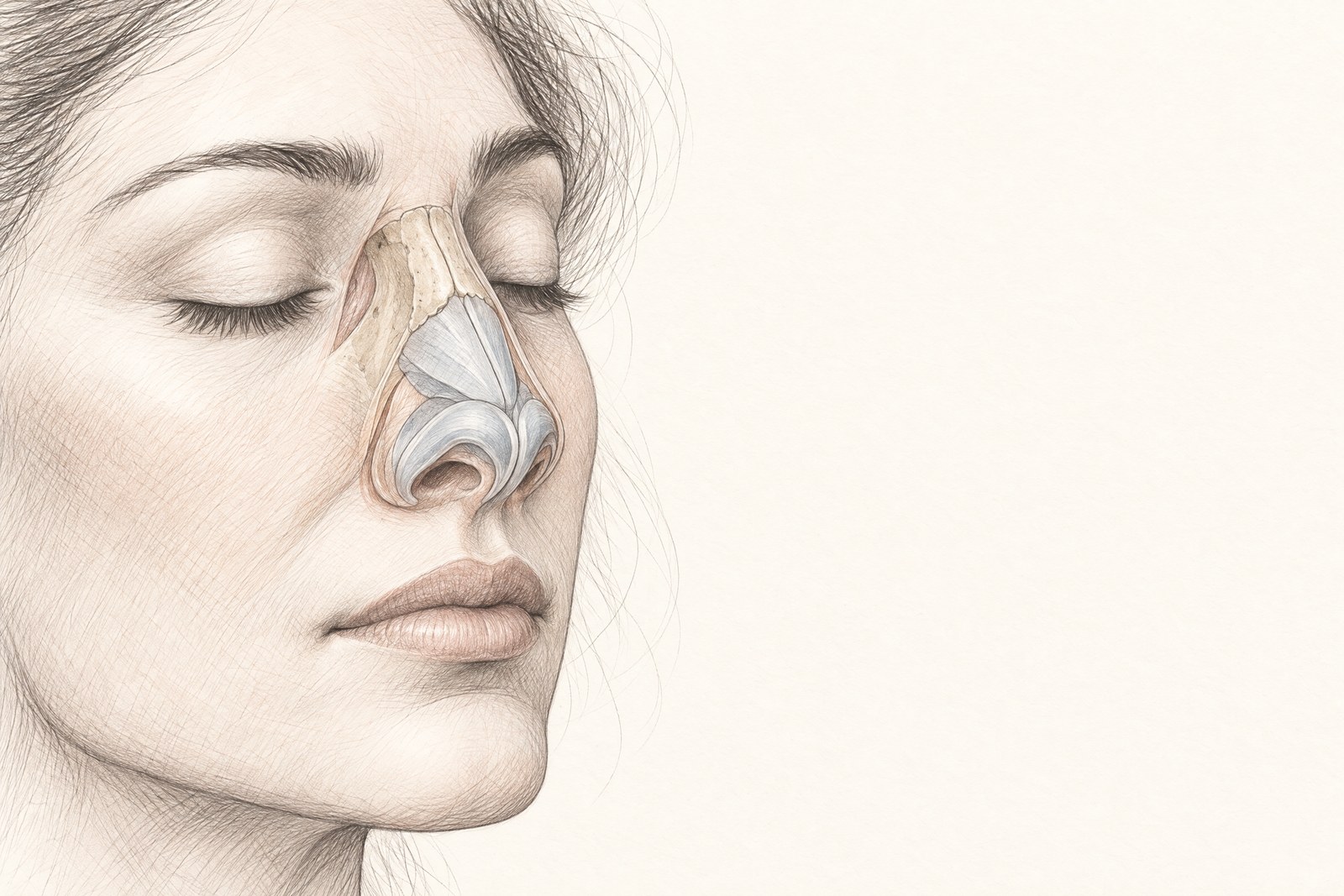

- The bridge
- The tip
- The nostrils
Rhinoplasty is surgery to reshape the nose, and at FarajzMD it is planned around two things at once: how the nose sits at the center of your face, and how it breathes. The two are planned together, so that the airway is considered as the shape changes.
Dr. Farajzadeh's approach is structure first. The framework of the nose is reshaped and reinforced, rather than reduced and left to the skin to settle over it, and supporting and structuring the nose in this way gives control over its shape, with the aim of preserving its function, and improving it where needed, as it is changed.
Both the open and the closed approach are offered, and your anatomy decides which. The closed approach works through incisions inside the nostrils. The open approach adds an incision across the columella, the narrow strip of skin between the nostrils.
Dr. Farajzadeh's approach
Each part of the plan for your nose is decided from your anatomy and your goals at consultation.
Closed structural rhinoplasty
Dr. Farajzadeh co-authored Closed Structural Rhinoplasty, published in Aesthetic Plastic Surgery in 2026, on techniques for restructuring the tip of the nose through the closed approach. He uses these techniques in select cases, and the paper is listed with his other papers on Research & Publications.
Breathing and appearance
When a patient has obstruction, airway correction, including work on the septum (the wall of cartilage and bone that divides the inside of the nose), is combined with the aesthetic rhinoplasty in the same operation.
Persian, Middle Eastern, and ethnic rhinoplasty
Refining the nose while preserving identity is a focus of Dr. Farajzadeh's practice. Persian, Middle Eastern, and Mediterranean noses often combine thicker skin with strong structure along the bridge, and he operates on noses of different heritages, including Latin American and Asian noses.
Revision rhinoplasty
When a nose has been operated on before, the plan begins with what the earlier surgery left, and grafts may be needed to rebuild support. For grafts, Dr. Farajzadeh's preference is cadaveric cartilage (donor cartilage prepared for surgical use).
Non-surgical rhinoplasty
In select cases, a non-surgical rhinoplasty with filler is offered, and whether it suits your nose is decided at consultation.
For men
Rhinoplasty for men calls for its own planning. The aim is a straight, strong line along the bridge and a tip refined without rotating it upward, so that the nose keeps the character of a masculine face.
Rhinoplasty is performed in an operating room, where the anesthesia is decided for each patient. The surgery centers Dr. Farajzadeh uses are accredited by AAAASF (Quad A).
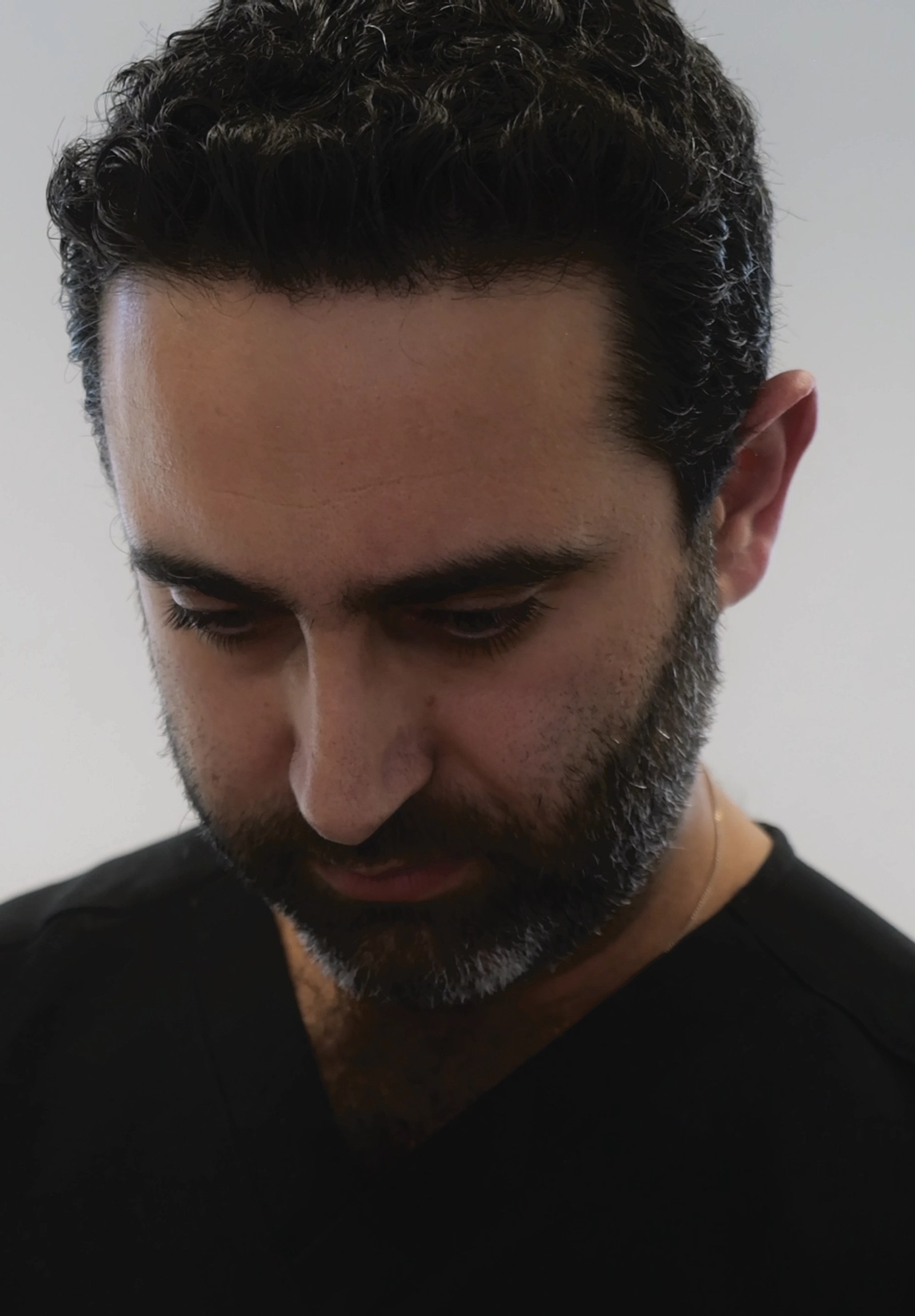
Your surgeon
Dr. Matt Farajzadeh takes the time to focus on his patients as individuals, their lives, and their goals. In rhinoplasty, that means planning the shape of the nose and its breathing together, with care for the features that make a nose your own, and he will tell you plainly when the honest answer is a smaller procedure, a different one, or none at all. Dr. Farajzadeh completed the Integrated Plastic and Reconstructive Surgery Residency at UC Davis, where he served as Chief Resident, and he is an Editorial Board Member of Aesthetic Plastic Surgery, with seventeen peer-reviewed publications.
Recovery
Healing after rhinoplasty unfolds in stages, and knowing its shape in advance makes each stage easier to move through.
Early recovery
A splint protects the nose at first, and congestion and swelling are at their most noticeable in this stage.
As the swelling resolves
The shape of the nose refines gradually as the swelling resolves.
The tip, last
The tip is the last part of the nose to settle.
Recovery follows Dr. Farajzadeh's signature multimodal pain control protocol, which combines non-narcotic pain medications to minimize the need for opioids.
The timing of each stage for your recovery is reviewed with you before surgery.
Cost and financing
The fee for rhinoplasty follows the scope of your plan, shaped by what it includes, such as work on the airway or the septum, grafting, and whether the nose has been operated on before, together with the facility and anesthesia the operation requires, and it is reviewed with you at your consultation once that plan is clear. Financing is available through Cherry and PatientFi.
Questions
Open or closed rhinoplasty: which is right for me?
Can breathing problems be addressed in the same operation?
Will my nose still look like my own?
Do you perform ethnic rhinoplasty?
I have had rhinoplasty before. Can it be revised?
Is non-surgical rhinoplasty an option?
What is recovery like?
How much does rhinoplasty cost?
More in Face & Neck
- Revision RhinoplastyBook a consultation
- Chin Augmentation
- Lip LiftBook a consultation

We look forward to taking care of you.
Surgical results are reviewed privately, case by case, during consultation.