

Deep Plane Facelift in Beverly Hills
A personal take on facial rejuvenation: bespoke procedures, customized to fit your needs, your anatomy, and your face.
What it addresses
- Jowls that have softened the line of the jaw
- Descent of the cheek, which deepens the folds between the nose and the mouth
- Loss of definition where the jawline meets the neck
- Laxity of the lower face beyond what skin care and non-surgical treatments can address
- A tired or heavy look that no longer matches how you feel
Who it is for
- Patients whose anatomy and tissue, more than their age, show descent of the cheek, jawline, and neck
- Patients in good general health
- Patients who are nicotine-free for a minimum of six weeks before and after surgery
- Patients whose faces show laxity and deflation together after substantial weight loss
- Patients carrying accumulated filler, once it is clear whether dissolving it should come first
What to expect
- A consultation with Dr. Farajzadeh himself, focused on understanding what you truly want before any procedure is discussed
- Surgery in an operating room
- Fat grafting when your face calls for it, to restore the volume a lift does not
- Attention to the deep neck in the same operation when your anatomy calls for it
- A recovery that unfolds in stages, with a result that continues to refine long after the swelling settles
What a deep plane facelift is
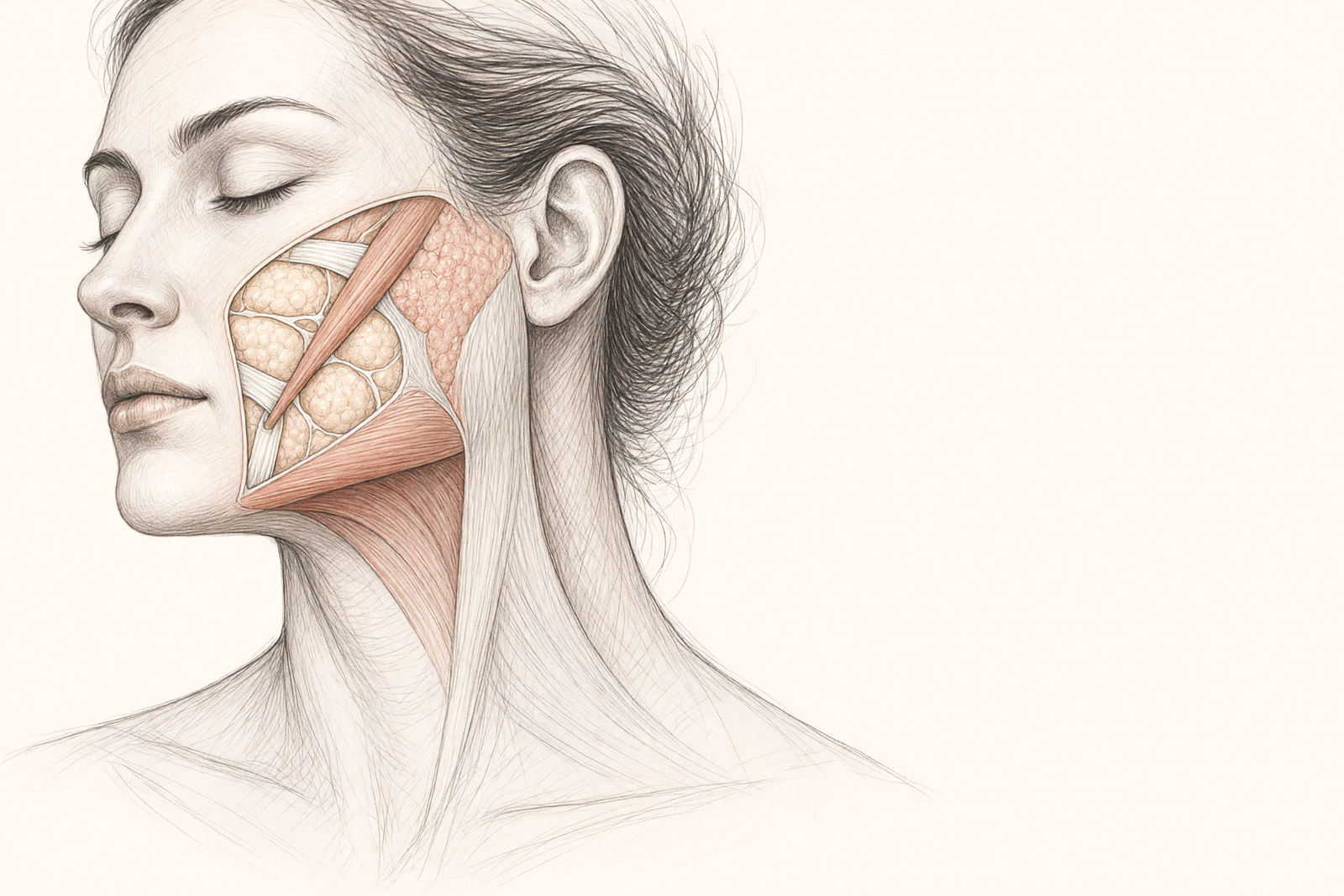
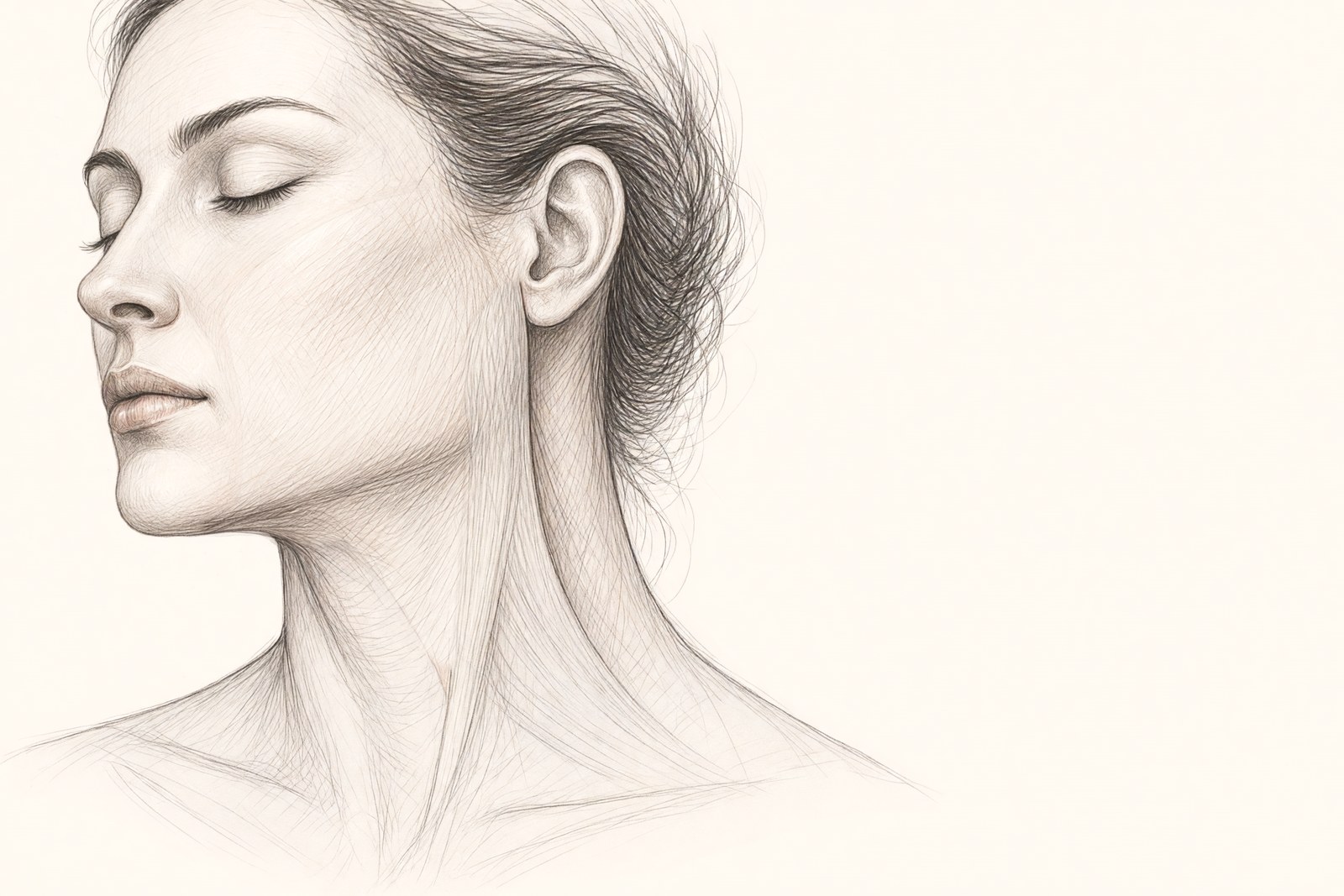
- The skin
- The fat compartments
- The SMAS
- The platysma
- The retaining ligaments
- The deeper structures of the face
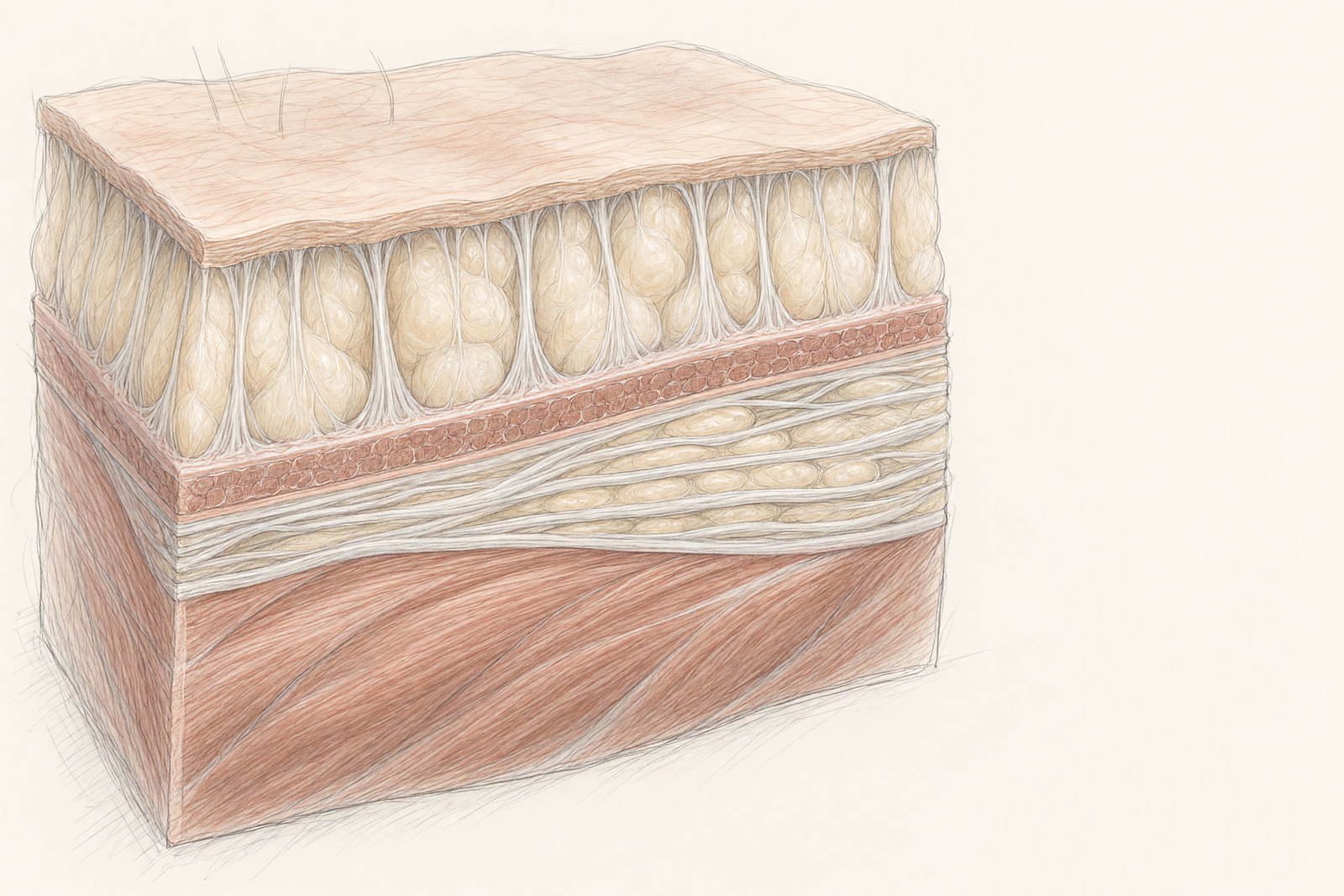
- The skin
- Fat
- The SMAS
- The deeper structures of the face
The deep plane facelift is a powerful and customizable procedure to reverse facial aging. Often, the deep plane facelift is the centerpiece of a combination of procedures aimed at the same goal: reversing the features of an aging face.
Aging in the face is a complex and multifactorial process, as the different layers age independently and in different ways. This is why at FarajzMD, Dr. Matt Farajzadeh performs a careful analysis of the face and custom-builds a treatment plan. Understanding which of these is shaping your face, and to what degree, is where planning begins, because the purpose of aesthetic surgery is to have a positive impact on the way people see themselves, and to restore a sense of confidence and peace.
The reason why the deep plane facelift is the centerpiece of a facial rejuvenation plan is that the deeper layer that supports the face loses its anchoring and the cheek and jawline begin to descend, the fat compartments that give a face its fullness gradually deflate, and the skin itself changes in quality and texture. The deep plane facelift answers the first of these, descent. Beneath the skin and fat of the face lies the SMAS (the superficial musculoaponeurotic system, a thin layer of fibrous tissue and muscle that holds the soft tissue of the face in position), which continues into the neck as the platysma, a broad, thin muscle. With time, the retaining ligaments (the fibrous attachments that anchor this layer to the deeper structures of the face) loosen, and the tissue they support settles lower. During a deep plane facelift, Dr. Matt Farajzadeh works beneath the SMAS, releases those attachments, and lifts the skin, fat, and SMAS of the cheek and jawline together as one connected unit, returning the tissue toward the position it held before it descended.
With the deeper layer bearing the lift, the skin can be laid back over the new position without being stretched, which is what allows the face to move naturally when you speak and smile. This is key to a result that is natural and truly rejuvenating. Many patients come to a first conversation about a facelift carrying the same worry, of looking pulled, windswept, or unlike themselves, and the deep plane approach is the answer to that concern: this powerful technique restores what has descended, with the aim that the face you see afterward is recognizably your own.
The illustrations on this page follow the anatomy described in two published papers.
- Minelli L, van der Lei B, Mendelson BC. The Deep Fascia of the Head and Neck Revisited: Relationship with the Facial Nerve and Implications for Rhytidectomy. Plast Reconstr Surg. 2024;153(6):1273-1288.
- Talei B, Ziai H. The Detailed Anatomy of the Deep Plane of the Face and Neck with Current Nomenclature. Facial Plast Surg. 2024;40(6):680-686.
Dr. Farajzadeh's approach
Two parts of Dr. Farajzadeh's approach carry the deep plane facelift beyond the lift itself, and each is decided from your anatomy and your goals at consultation.
Fat grafting
A lift restores the position of the tissues, and restoring the fullness a face has lost is a separate task, which is why Dr. Farajzadeh includes fat grafting in your plan when your face calls for it. Fat is taken from elsewhere in your body, prepared, and placed where the face has deflated, so that volume is restored with your own tissue during the same operation. Your own fat also carries stem cells and growth factors, which is part of how fat grafting can help rejuvenate the tissues of the face, not only restore their volume. It reflects the philosophy of the practice as a whole, in which fat is the filler of first choice and synthetic filler is used in select cases, above all in the lips.
When years of filler have accumulated in the face, the plan may begin with filler dissolving, with or without fat grafting, for facial rehabilitation; sometimes that prepares the face for a facelift, and sometimes it is all the face needs.
The deep neck
The jawline and the neck age together, and in the same operation Dr. Farajzadeh can address the deeper structures that shape the neck. When your anatomy calls for it, this includes the subplatysmal fat (fat that sits beneath the platysma, the thin muscle of the neck) and the submandibular glands (salivary glands beneath the jawline that can become more visible as the tissue around them descends). When the neck is the primary concern on its own, a dedicated neck lift may be the better place to begin.
For men
Facial rejuvenation for men calls for its own planning. Beard-bearing skin is thicker and heavier, incisions have to respect the sideburn and the beard, and a man's jaw and neck carry a different structure and angle, so the plan is built to restore the jawline and neck while preserving the character of a masculine face.
A deep plane facelift is performed in an operating room, where the anesthesia is decided for each patient. The surgery centers Dr. Farajzadeh uses are accredited by AAAASF (Quad A).
Your surgeon
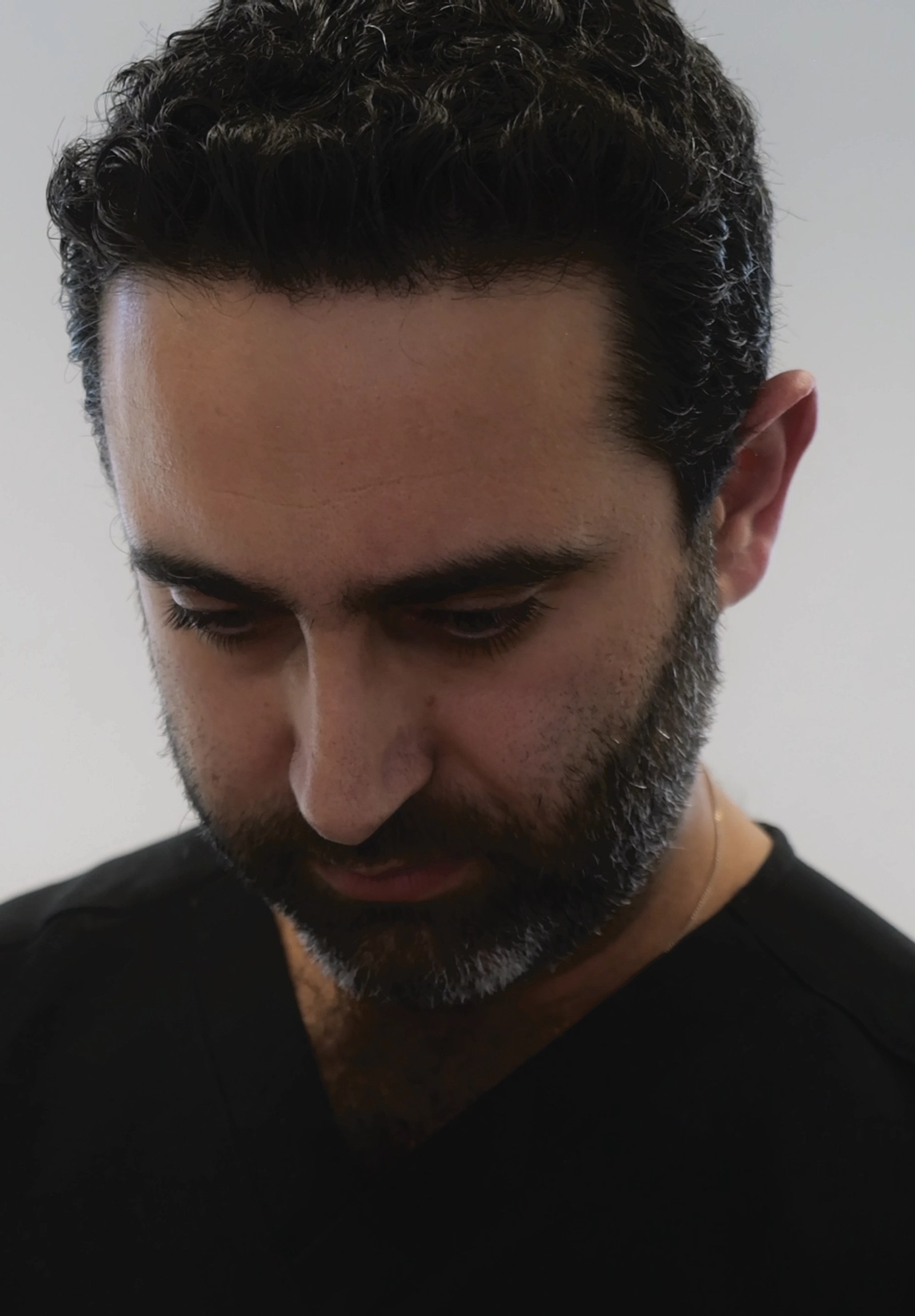
Dr. Matt Farajzadeh takes the time to focus on his patients as individuals, their lives, and their goals. He operates on the face, breast, and body, with a particular devotion to facial rejuvenation, and he will tell you plainly when the honest answer is a smaller procedure, a different one, or none at all. Dr. Farajzadeh completed the Integrated Plastic and Reconstructive Surgery Residency at UC Davis, where he served as Chief Resident, and he is an Editorial Board Member of Aesthetic Plastic Surgery, with seventeen peer-reviewed publications.
Recovery
Healing after a deep plane facelift unfolds in stages, and knowing its shape in advance makes each stage easier to move through.
Early recovery
Swelling and bruising build before they begin to settle, and this is the time to rest and let healing begin. It is common for this early stretch to feel harder emotionally than expected, and that feeling eases as the swelling does.
Returning to your routine
As swelling and bruising fade, daily routines and time out in public return, while the face continues to settle beneath the surface.
The longer settling
The result keeps softening and refining for a long while after the visible signs of surgery are gone, as the last of the swelling resolves and the tissues settle into their new position.
Recovery follows Dr. Farajzadeh's signature multimodal pain control protocol, which combines non-narcotic pain medications to minimize the need for opioids.
The timing of each stage for your recovery is reviewed with you before surgery.
Cost and financing
The fee for a deep plane facelift follows the scope of your plan, shaped by what it includes, such as work on the deep neck, fat grafting, and the facility and anesthesia the operation requires, and it is reviewed with you at your consultation once that plan is clear. Financing is available through Cherry and PatientFi.
Questions
How is a deep plane facelift different from other facelifts?
Will I look pulled or unlike myself?
What is the right age for a facelift?
How long do the results of a facelift last?
Where are the incisions?
What is recovery like?
Can a deep plane facelift be combined with other procedures?
How much does a deep plane facelift cost?
I have a lot of filler. Should it be dissolved before a facelift?

We look forward to taking care of you.
Surgical results are reviewed privately, case by case, during consultation.