
Facial Fat Transfer in Beverly Hills
Volume your face has lost, restored with your own tissue, placed conservatively and in stages as part of a plan built for your face.
What it addresses
- Temples that have hollowed
- Cheeks that have lost their fullness
- Hollows where the under-eye meets the midface
- Lost definition along the jawline and the chin
- A face that has deflated after significant weight loss
Who it is for
- Patients whose faces have lost volume, through aging or through weight loss
- Patients who would rather restore volume with their own tissue than with synthetic filler
- Patients in good general health
- Patients who are nicotine-free for a minimum of six weeks before and after surgery
- Patients carrying years of filler, once it is clear whether dissolving it should come first
What to expect
- A consultation with Dr. Farajzadeh himself, focused on understanding what you truly want before any procedure is discussed
- Fat taken gently from your own body through small access points
- Placement that is conservative and staged, with more than one session not uncommon
- A plan that accounts from the start for the fat that does not survive
- A recovery in stages, at the donor site and in the face
What facial fat transfer is
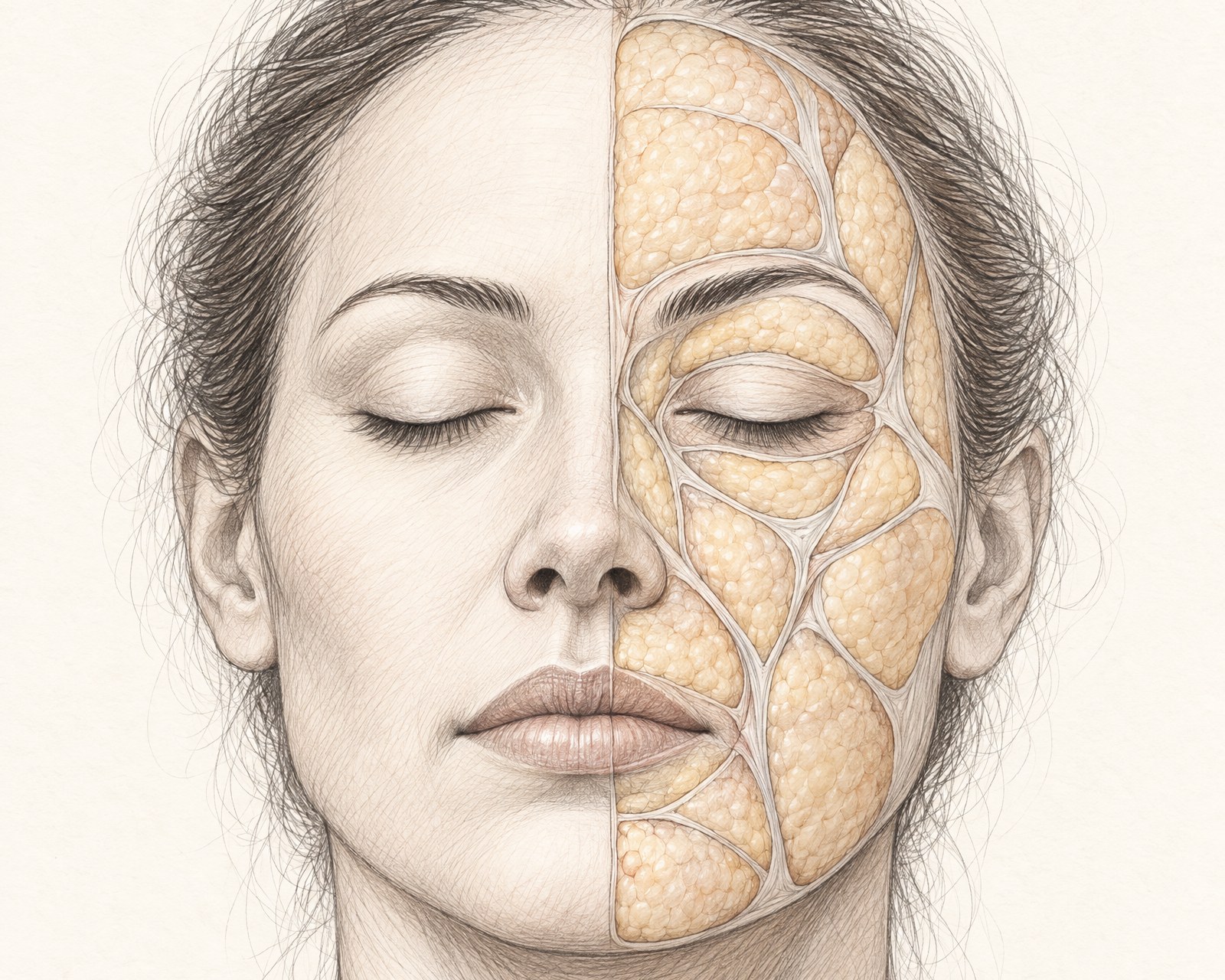

- The temples
- The cheeks
- The under-eye
- The jawline
- The chin
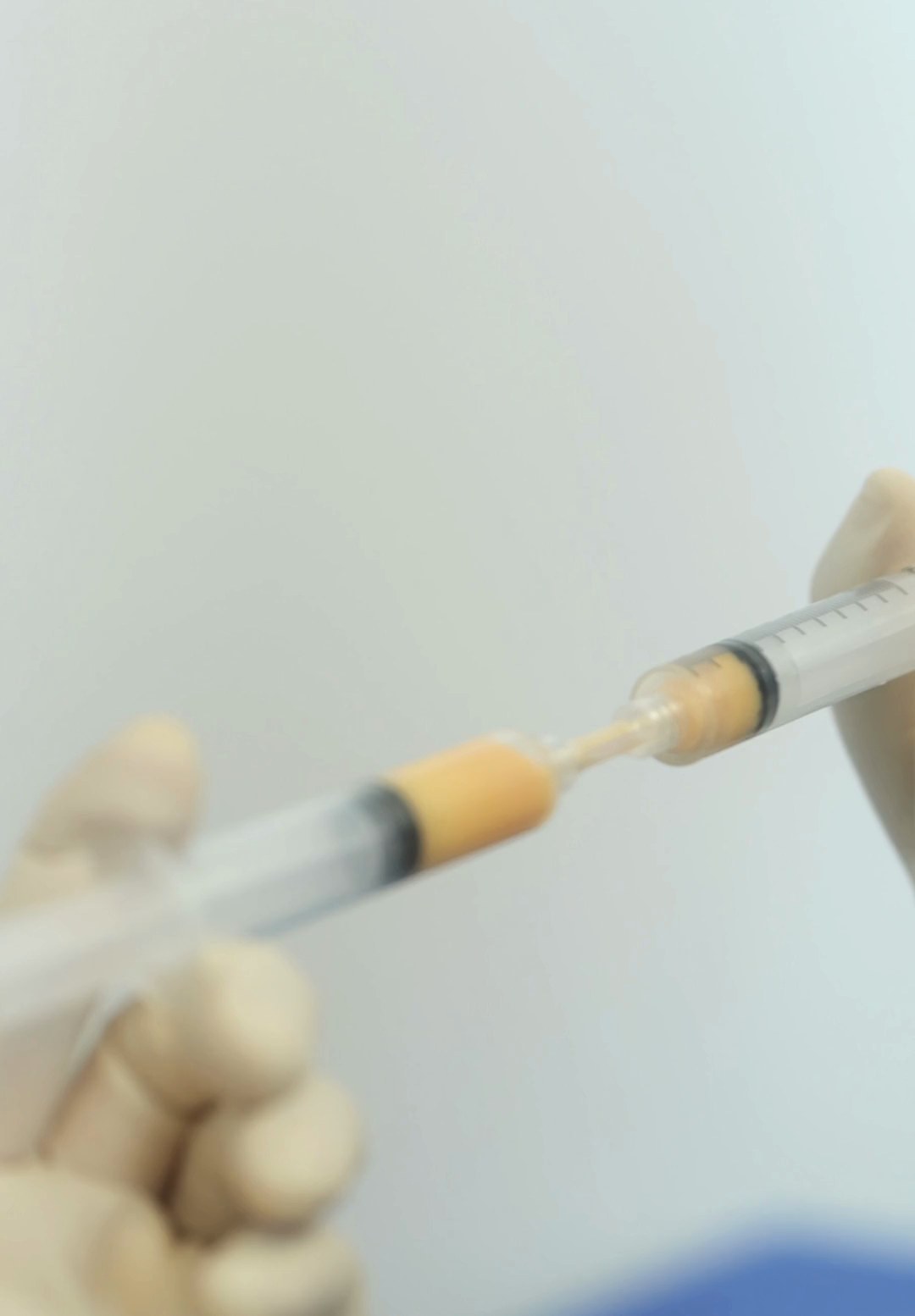
Facial fat transfer, also called fat grafting, restores volume the face has lost using your own tissue. Fat is taken gently from elsewhere in your body, refined, and placed in fine passes, in small droplets across several layers of the face's fat compartments, so that each parcel of fat sits within reach of a blood supply.
At FarajzMD, fat is the filler of first choice. Where the face has lost volume, it is restored with living tissue from your own body, and synthetic filler is used in select cases, above all in the lips.
The fat compartments that give a face its fullness empty with age, and faster after significant weight loss. Fat transfer answers that loss of volume directly. It can be the whole plan, or one part of a plan that also lifts what has descended, such as a deep plane facelift, and which it is depends on your anatomy and your goals.
Dr. Farajzadeh's approach
Dr. Farajzadeh's approach to fat transfer prioritizes safety and aims to minimize complications and distortion of the face, and where and how much fat is placed is decided from your anatomy and your goals at consultation.
Conservative and staged
Fat is placed conservatively and in stages, which is the protection against overfilling. Needing a touch-up is preferable to overgrafting, which can distort the face and make a result look unnatural, and it is not uncommon to need more than one session of fat grafting.
What integrates
Not all transferred fat survives, and the plan accounts for that from the start. The fat that integrates becomes living tissue of your face.
Where fat is placed
Fat can be placed throughout the face, at superficial and deeper layers: at the temples, in the cheeks, at the junction of the under-eye and the midface, and along the jawline and the chin. For the lips, fat is offered to select patients who want their own tissue there rather than filler.
The donor site
Fat is usually taken from the abdomen or the thighs, and from the flanks or the back when needed, through small access points.
The weight-loss face
Significant weight loss, increasingly with GLP-1 medication, empties the fat compartments of the face faster than aging does. Structural restoration of that volume with your own fat, sometimes together with a lift, is the correction.
Nanofat
Fat can also be processed into nanofat, a fine emulsion of fat. At FarajzMD, nanofat is offered as a skin treatment, with microneedling or on its own, and in lower eyelid surgery, where the plan calls for it, it may be used with micro fat grafting to support the lower lid.
After years of filler
For a face that has carried filler for years, the plan may begin with filler dissolving, with fat grafting to follow where volume is missing.
Research
Dr. Farajzadeh co-authored an invited discussion, published in Aesthetic Plastic Surgery in 2022, on a study of fat graft survival. It is listed with his other papers on Research & Publications.
Facial fat transfer can be performed in the office, under local anesthesia, or in an operating room, where the anesthesia is decided for each patient. The surgery centers Dr. Farajzadeh uses are accredited by AAAASF (Quad A).
Your surgeon
Dr. Matt Farajzadeh takes the time to focus on his patients as individuals, their lives, and their goals. Fat is his filler of first choice, he co-authored an invited discussion on fat graft survival in Aesthetic Plastic Surgery, and he will tell you plainly when the honest answer is a smaller procedure, a different one, or none at all. Dr. Farajzadeh completed the Integrated Plastic and Reconstructive Surgery Residency at UC Davis, where he served as Chief Resident, and he is an Editorial Board Member of Aesthetic Plastic Surgery, with seventeen peer-reviewed publications.
Recovery
Healing after fat transfer unfolds in stages, in the face and at the site where the fat was taken.
Early recovery
Swelling and bruising are at their most noticeable in the first stage, while healing begins.
As the bruising fades
The swelling and bruising resolve.
The longer settling
What remains of the swelling keeps improving over the following months.
Recovery follows Dr. Farajzadeh's signature multimodal pain control protocol, which combines non-narcotic pain medications to minimize the need for opioids.
The timing of each stage for your recovery is reviewed with you before treatment.
Cost and financing
The fee for facial fat transfer follows the scope of your plan, shaped by the areas treated, whether it is combined with a lift or another procedure, whether a second session is planned, and whether it takes place in the office or in an operating room, and it is reviewed with you at your consultation once that plan is clear. Financing is available through Cherry and PatientFi.
Questions
Fat or filler: which is right for me?
Where does the fat come from?
Does all of the fat survive?
How is overfilling avoided?
Can fat be placed in the lips?
I have lost a lot of weight. Can fat transfer help?
What is recovery like?
Can fat transfer be combined with other procedures?
How much does facial fat transfer cost?
I have had filler for years. Where do I start?

We look forward to taking care of you.
Surgical results are reviewed privately, case by case, during consultation.