
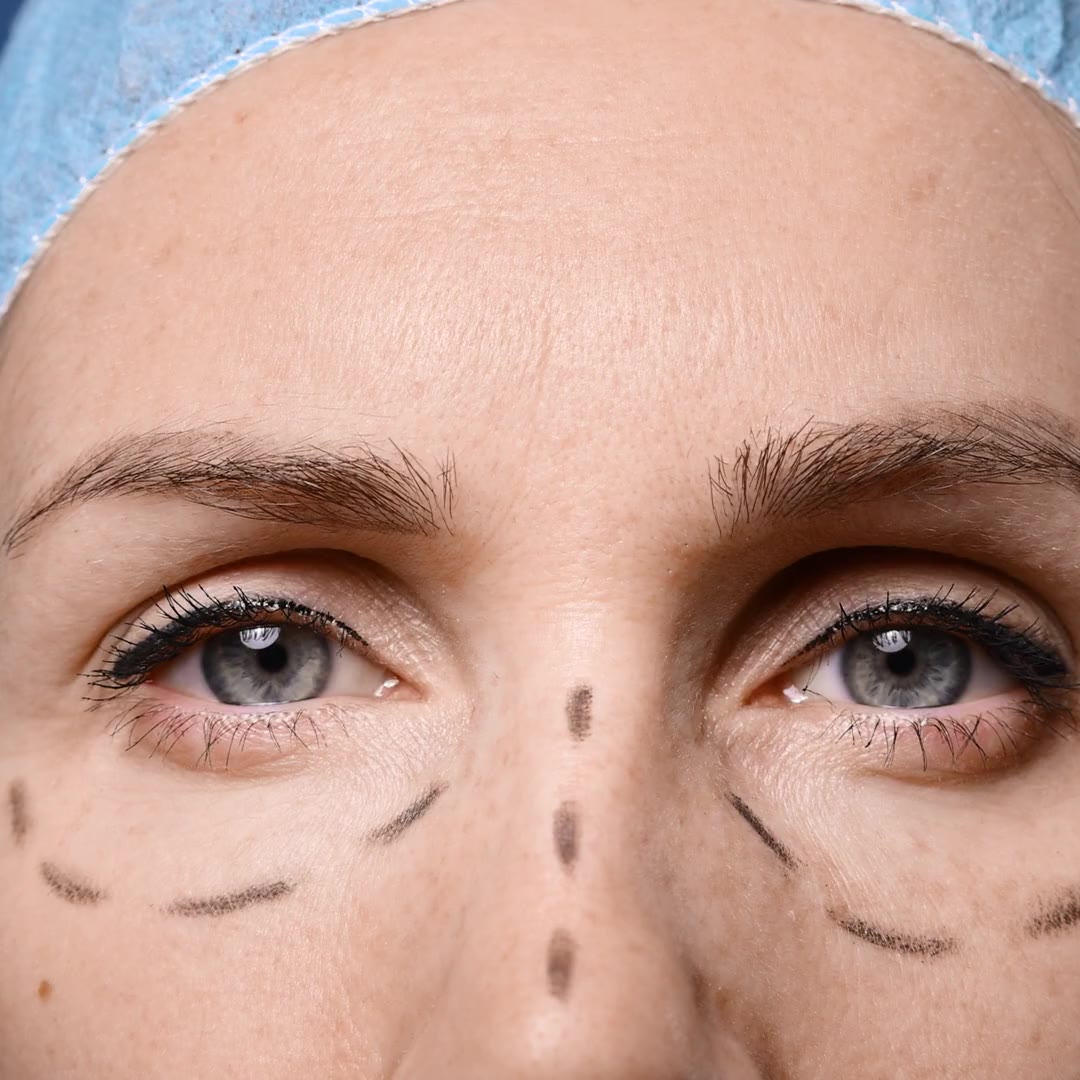
Eyelid Surgery (Blepharoplasty) in Beverly Hills
Surgery of the lids, planned with the brow and the volume around the eyes, with the goal of a look that is more awake, alert, and joyful.
What it addresses
- Under-eye bags and hollows
- Heavy, redundant skin of the upper lid that weighs on the lashes
- An upper lid that droops, or upper lids that sit at different heights
- Hollowing of the upper lid and a skeletal look beneath the brow, with fat grafting
- A brow that has descended toward the eyes, with a brow lift
Who it is for
- Patients whose anatomy and tissue, more than their age, show the changes around the eyes that eyelid surgery addresses
- Patients in good general health
- Patients who are nicotine-free for a minimum of six weeks before and after surgery
- Patients with filler in the under-eye or midface, once it is clear whether dissolving it should come first
What to expect
- A consultation with Dr. Farajzadeh himself, focused on understanding what you truly want before any procedure is discussed
- A plan that considers the brow, the lids, and the volume around the eyes together
- A conversation about any filler or injections you have had around the eyes
- A lower-lid approach chosen at consultation from your anatomy, most often from inside the lid
- A recovery that unfolds in stages, with the timing of each reviewed with you before surgery
What eyelid surgery is
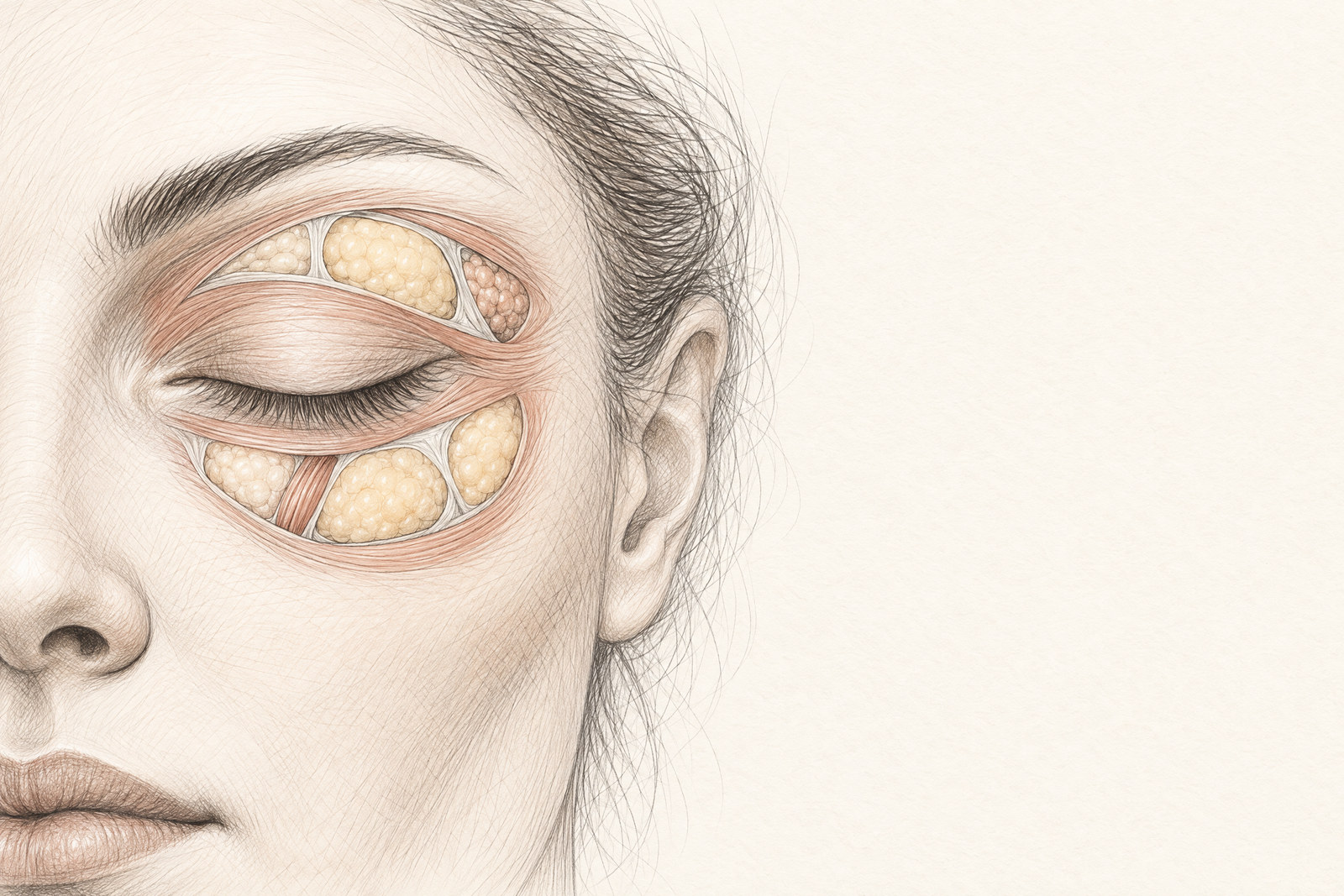

- The upper lid
- The lower lid
- Fat
Blepharoplasty, or eyelid surgery, is surgery of the upper lids, the lower lids, or both, and at FarajzMD it begins with the whole region around the eyes. The brow above the lids, the lids themselves, and the volume beneath them are considered together, and understanding which of them is shaping the way your eyes look, and to what degree, is where planning begins.
With time, the fat that surrounds the eyes deflates while the brow and the midface descend, which reveals the bony rim of the eye socket beneath them, and the skin of the lids grows thinner. The eyes sit at the center of the face and carry so much of what we express without words, and thoughtfully rejuvenating the area around them can bring that expression back to life. The goal is a result that is natural and restorative, and a look that is more awake, alert, and joyful.
For the upper lids, a brow lift, ptosis repair (surgery for a drooping eyelid), or upper blepharoplasty is selected, alone or together, according to what is present: a brow that has descended, redundant skin on the upper lid, or a lid that has dropped. For the lower lids, lower blepharoplasty removes the fat that pushes forward to form under-eye bags, and fat grafting to the midface and the under-eye may join it in the same plan, to support the lower lid and restore a youthful contour where the lid meets the cheek.
Dr. Farajzadeh's approach
Eyelid surgery is planned alongside the brow and the volume around the eyes, and each part of the plan is decided from your anatomy and your goals at consultation.
The upper lids
The plan for the upper lids begins with the brow above them, because the two are considered together. An evaluation shows whether heaviness above the eyes comes from redundant skin on the upper lid, from a brow that has descended, or from a lid that has dropped, a condition called ptosis. Upper blepharoplasty removes the excess skin of the upper lid. A brow lift is used to correct the descent of the brow. Ptosis repair addresses the drooping of the lid and a difference in height between the two lids. The incision for an upper blepharoplasty lies within the natural crease of the upper lid, where it often heals as a fine scar that rests in the crease. Where the upper lid has hollowed, fat grafting can address the hollowing and the skeletal look beneath the brow.
The lower lids
The lower lids can be approached from inside the lid, a transconjunctival approach (through the conjunctiva, the thin lining on the inner surface of the lid), or externally, and an external scar is sometimes needed. Which approach suits your lids is decided at consultation, from your anatomy. Most often, Dr. Farajzadeh operates from inside the lid. Through that incision, the fat that has pushed forward to form under-eye bags is removed. Where the plan calls for it, micro fat grafting (fat placed in very small parcels) and nanofat grafting (fat processed into a fine emulsion) are then used to support the lower lid, address the deflation of the midface, and create a smooth contour where the lid meets the cheek.
With the brow and the volume around the eyes
The brow, the lids, and the volume around the eyes are considered as one region, which is why a brow lift sits beside eyelid surgery at FarajzMD, and why the plan may include facial fat transfer, which restores volume with your own tissue. When filler has accumulated around the eyes or in the midface, the plan may begin with filler dissolving, with or without fat grafting, for facial rehabilitation.
For men
Eyelid surgery for men calls for its own planning, because the anatomy around a man's eyes differs from a woman's. The plan aims to preserve the masculinity of the brow and its shape, along with the areas of volume around the eyes, and the character of a masculine face.
Upper eyelid surgery can be performed in the office, under local anesthesia, or in an operating room, and lower eyelid surgery is performed in an operating room, where the anesthesia is decided for each patient. The surgery centers Dr. Farajzadeh uses are accredited by AAAASF (Quad A).
Your surgeon
Dr. Matt Farajzadeh takes the time to focus on his patients as individuals, their lives, and their goals. Around the eyes, that means reading the brow, the lids, and the volume beneath them together before anything is decided, and he will tell you plainly when the honest answer is a smaller procedure, a different one, or none at all. Dr. Farajzadeh completed the Integrated Plastic and Reconstructive Surgery Residency at UC Davis, where he served as Chief Resident, and he is an Editorial Board Member of Aesthetic Plastic Surgery, with seventeen peer-reviewed publications.
Recovery
Healing after eyelid surgery unfolds in stages, and knowing its shape in advance makes each stage easier to move through.
Early recovery
Swelling and bruising are at their most noticeable in the first stage, and this is the time to rest and keep to the activity limits you are given while healing begins.
As the bruising fades
The bruising resolves and the swelling eases, the lids complete their healing, and normal activity returns.
The longer settling
What remains of the swelling keeps improving over the following months. If you have had filler or other injections in the under-eye or midface, swelling can last significantly longer, which is one reason Dr. Farajzadeh asks about your injectable history at consultation and decides with you whether old filler should be dissolved before surgery.
Recovery follows Dr. Farajzadeh's signature multimodal pain control protocol, which combines non-narcotic pain medications to minimize the need for opioids.
The timing of each stage for your recovery is reviewed with you before surgery.
Cost and financing
The fee for eyelid surgery follows the scope of your plan, shaped by what it includes, such as the upper lids, the lower lids, or both, work on the brow, ptosis repair, fat grafting, and where the surgery takes place, and it is reviewed with you at your consultation once that plan is clear. Financing is available through Cherry and PatientFi.
Questions
Where are the incisions?
Is it my eyelids or my brow?
What is ptosis repair?
Am I a candidate for eyelid surgery?
What is recovery like?
Can eyelid surgery be combined with other procedures?
How much does eyelid surgery cost?
I have filler under my eyes. Should it be dissolved first?

We look forward to taking care of you.
Surgical results are reviewed privately, case by case, during consultation.